Jan 31, 2011

Book I hope everyone reads: The genius in all of us

The Genius in All of Us was really a mind boggling experience. It challenges long list of believes on learning, personal capabilities and restrictions and impact of your heritage. Author David Shenk has unbelievably well explained these groundbreaking results of recent findings on genetics.

Idea behind the book is that genes don't affect as much as we commonly believe on our capabilities on doing or learning something. Common misconception is that somebody have "better genes" for that or "people have born with skill" to make something. That just isn't true. Environment, parents, childhood, food, the way our parent lived and especially what we do matter more than just pure genetics.

It's a controversial subject, but it comes with more than 150 pages or references and proof. I read things with open mind and heart, but of course when somebody comes and says that everything you've believed in genetics is not exactly true, it raises some doubts. David has prepared his subject really well with lots and lots of scientific and historical proof and there are lot of easily understandable examples.

I really loved this book. As a dad of two small daughter (9m and 3y) I also felt the responsibility to encourage them to learn and use full potential of themselves without anyone, not me or anyone else saying them that they couldn't do something. But it's not only for parents. This is for everyone who want find out why you shouldn't believe anyone saying that it's in their genes or they're born with it.

I know that after reading this book I'm a different person. This is one of the the books I will remember for a long long time.

Written by +Henri Hämäläinen

Jan 27, 2011

Shoes as your social media tools

UPDATE 5.2.2011: Now the video is visible again. It's updated a bit, but it have all the great content still there. Now it says clearly that it's a school project and not done by ad agency. Apologies for that. 

UPDATE 31.1.2011: These guys have decided to make this video locked with password. That's just lame! Why in earth to put it to Vimeo in the first place if people can't share it. So sorry for video not being available anymore. I want to keep the post here still if you want to read it.

I find this idea really interesting. You would have RFID in your shoe and you could easily check in places and connect to any social services using specific spots (or mats as in this one). Check the video out:


RFID in shoes from Hampus Lemhag on Vimeo.
As I understand this isn't really real yet, but it's a concept done by ad agency a school project in Hyper Island.

There's definitely something in the idea. My guess is that this connecting yourself to online world with touching things will become more and more popular in near future. There are many good options what is the "device" you will connect with, it could be phone, it could be some jewel or it could be shoe. It just needs to be dead simple.  

Written by +Henri Hämäläinen

Jan 24, 2011

How learning, charity and new technology come together

I run into couple of inspiring services which combines learning and charity type of behavior. They are both taking advantages of Skype. First one is connection native language speakers in Latin America and Africa to people who want to learn French and Spanish and second one is connecting children in India to volunteers who want to help these kids to learn.

The idea behind Glovico is brilliant. Native speakers in countries where hourly wages are smaller than in many western countries can give private language learning lessons. Many in western countries couldn't afford over 40 Eurors (~55 dollars) hourly wages for private language lessons. With this service you can get 5-6 hours with that same amount. Maybe the teaching methods are not the same than in some western countries, but most important thing is that you can talk and chat with native speaking person.

Second service is Solesandsomes. It stands for Self Organizing Learning Environments & Self Organized Mediation Environments. SOLE part is about creating environment where kids can learn anything interesting around the web. SOME part is actually the one I see more inspiring. In that they are connecting volunteers around UK and elsewhere to read stories to children and being mentors for these kids. Original idea was grannies reading fairytales for kids, but it grew to be much more. People are actually helping these kids to learn about life and learning.


There are actually almost countless possibilities for each of us to learn more. There are open universities and lectures you can take for free in the web. For example check Khan Academy for maths learning or Academic Earth for University level education. And I bet there are more.

I think world is really going towards education that is free and available to those who really want to learn.

Written by +Henri Hämäläinen

Jan 22, 2011

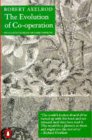
Book I read: Evolution of Cooperation from Robert Axelrod

This book is about prisoner's dilemma. It's an older book (from year 1984), but this is a subject that will never go old. It's not an entertaining book, but is full of excellent observations about everyday selections between two living creatures or organisations. Writer of this book is respected professor Robert Axelrod best known from this subject.

Prisoner's dilemma is the situation where to guys have been arrested and if ane of the two would confess, he would get out with lighter sentense, but then the other would suffer. This would definetly have an affect on all later interaction between these two. On the other hand, if neither of the guys would confess, they might both get out without sentence. This situation is called prisoner's dilemma. Here's one more post explaining it quite well.

I wouldn't have believed that book about that problem can last for bit less than 200 pages and still be full of valuable information. Reading the book does require interest towards the subject, it's not trying to popularise the dilemma. It explains in very detailed way how the game works, why different strategies work and other's don't.

What was a pleasent surprise was how good real life examples it had to explain how the theory and strategies are visible in the real life. It has stories from world war one, nature and evolution biology and of course from politics.

If you want to understand better how and why co-operation between two or more evolves and if you want to learn why co-operating and being nice has it's benefits on working with others, read it. I warn you that it's not any of these easy reading books there so often nowadays are, but it's full of great content.  

Written by +Henri Hämäläinen